
For a complete guide to industrial valve types, visit the Industrial Valve Types Overview page.
A diaphragm valve uses a flexible membrane—the diaphragm—to control flow, pressing it down onto a body weir or onto the body floor to shut off, and lifting it to open. Its defining feature is that the diaphragm seals the process fluid entirely away from the operating mechanism and the atmosphere: there is no stem packing in contact with the fluid and no path for stem leakage. This makes the diaphragm valve the natural choice for corrosive chemicals, abrasive slurries, and the hygienic, sterile and high-purity duties of the pharmaceutical, biotech and food industries. This page explains how diaphragm valves work, the critical weir-versus-straight-through distinction, diaphragm material selection, and where the design excels.
1. Working Principle
Basic Mechanism
A diaphragm valve has two flow-wetted parts—the body and the diaphragm—and a bonnet assembly that contains the operating mechanism. Turning the handwheel or stroking the actuator drives a compressor (also called the spindle or plunger) downward. The compressor pushes the flexible diaphragm against the sealing surface inside the body: in a weir design, against a raised weir cast across the bore; in a straight-through design, against the contoured body floor. When the diaphragm contacts the sealing surface across its full width, flow stops. Raising the compressor lets the diaphragm flex back up and reopens the bore.
Because the diaphragm is clamped between the body and bonnet around its entire perimeter, the fluid is isolated within the lower body and diaphragm only. The stem, compressor and all bonnet parts stay dry and never contact the process. This eliminates the stem-packing leakage path that other valve types must manage and is the source of the diaphragm valve's leak-free, low-maintenance reputation. For broader selection context, see Common Valve Selection Mistakes.
Flow Behavior and Throttling
Diaphragm valves perform both on-off isolation and moderate throttling. As the compressor descends, the gap between the diaphragm and the weir or floor narrows, reducing flow area in a controllable way that suits moderate flow regulation—though they are not precision control valves. The diaphragm stroke and the cyclic stress it experiences are central design considerations: the shorter the stroke, the lower the flexural stress and the longer the diaphragm life. This is one of the main reasons the weir design, with its short diaphragm travel, is so widely used. The valve is bidirectional and seals equally in either flow direction.
2. Structural Diagram and Anatomy
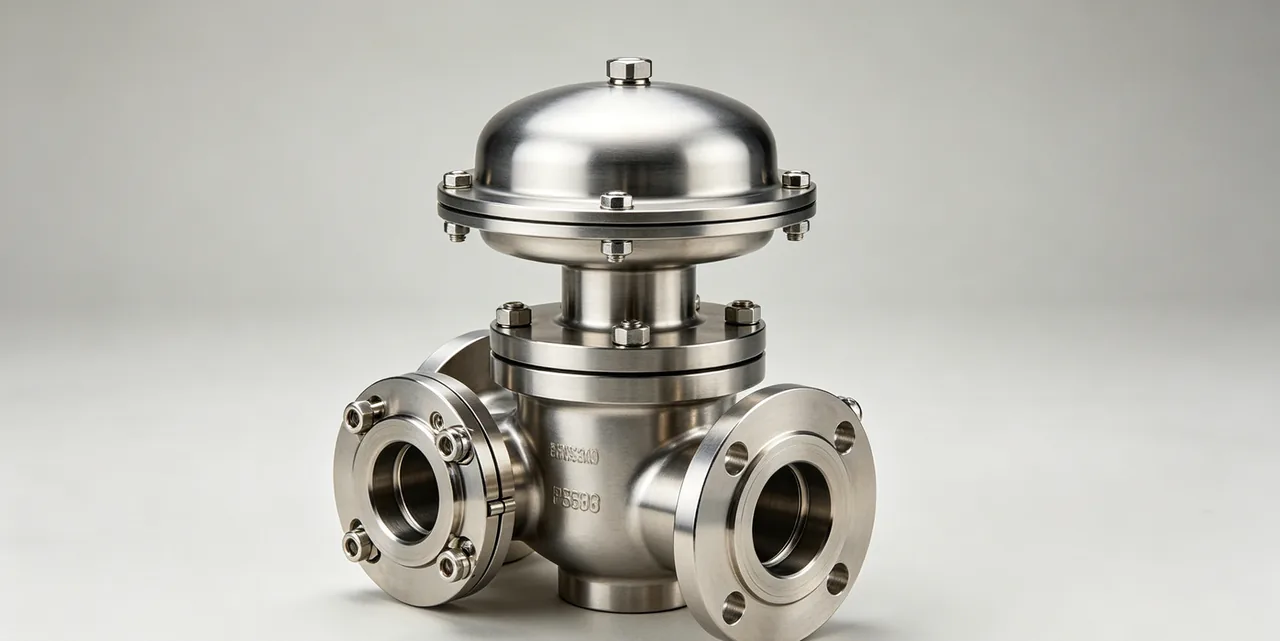
Component Breakdown
A diaphragm valve consists of a small number of components, with the diaphragm and body lining as the engineered, application-specific parts:
- Body: The pressure-retaining shell with the inlet and outlet connections and the internal sealing surface (weir or contoured floor). Bodies are produced in stainless steel (316/316L) for hygienic service, and in metal-with-lining form (PFA, PTFE, glass, rubber or ebonite lining over a metal shell) for corrosive chemical service so that no bare metal contacts the fluid.
- Diaphragm: The flexible membrane that does the sealing and is the valve's primary wear part. Common materials include EPDM (general and hygienic water/steam service), Buna-N (oils and general service), and a two-piece PTFE-faced diaphragm backed by an elastomer cushion (aggressive chemicals, high purity). The diaphragm material sets the temperature, chemical-compatibility and cycle-life envelope of the valve.
- Compressor: The component that transmits stem force evenly across the diaphragm to press it onto the sealing surface; its profile is matched to the weir or floor geometry.
- Bonnet and stem: The non-wetted operating assembly. Because the bonnet is sealed from the fluid by the diaphragm, the stem requires no fluid-contacting packing.
- Actuator: Handwheel for manual duty, or pneumatic (diaphragm/piston) and electric actuators for automated and CIP/SIP-controlled hygienic systems.
Weir vs Straight-Through
The single most important selection decision for a diaphragm valve is the body style, and it is a genuine engineering trade-off:
- Weir type: A raised weir is cast across the bore and the diaphragm seals against its top. The diaphragm travels only a short distance to close, which keeps flexural stress low and gives the longest diaphragm life and the most reliable, repeatable shutoff. The weir does, however, raise pressure drop and leaves a small amount of liquid retained behind the weir. The weir type is the dominant choice for clean liquids, water, hygienic process fluids and steam-cleaned systems.
- Straight-through (full-bore) type: The body has a smooth, unobstructed bore and the diaphragm seals against the body floor. This gives low pressure drop, free drainage and an unrestricted path that suits viscous fluids, slurries and solids-laden media that would build up behind a weir. The longer diaphragm stroke means higher diaphragm stress and somewhat shorter diaphragm life than the weir type.
In short: choose the weir type for shutoff reliability and diaphragm longevity on clean and hygienic fluids; choose the straight-through type for viscous, slurry or self-draining duties where low restriction matters more than diaphragm life.
3. Advantages and Disadvantages
The diaphragm valve's strengths and limits both stem from its membrane-sealed construction.
Advantages:
- No stem leakage and no fluid-wetted packing: the diaphragm isolates the fluid from the mechanism and atmosphere, ideal for hazardous, corrosive and sterile media.
- Excellent corrosion resistance: lined bodies and PTFE-faced diaphragms keep aggressive chemicals away from all metal parts.
- Hygienic and cleanable: smooth, crevice-free flow path is well suited to CIP (clean-in-place) and SIP (steam-in-place) and to crevice-free, drainable sanitary design.
- Handles slurries and solids (straight-through): the full-bore design passes suspended solids and viscous media.
- Simple, low-maintenance: the diaphragm is the only routine wear part and is straightforward to replace.
Disadvantages:
- Pressure and temperature limited by the diaphragm: the elastomer or PTFE membrane caps the allowable pressure and temperature well below metal-seated valves.
- Diaphragm is a consumable: it fatigues with cycling and must be replaced on a maintenance schedule.
- Not for high pressure: unsuitable for high-pressure pipeline and steam-header duties.
- Moderate throttling only: not a precision modulating control valve.
4. Industrial Applications and Use Cases
Common Industrial Sectors
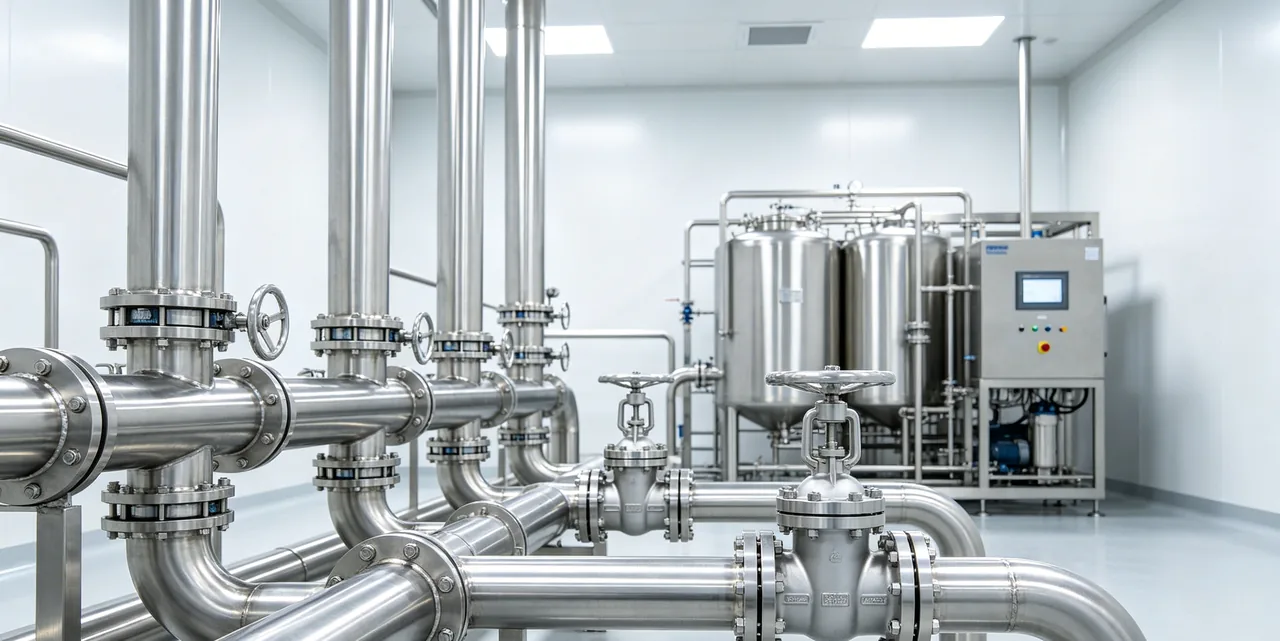
Diaphragm valves are concentrated in hygienic and corrosive-service industries:
- Pharmaceutical and biotechnology: the leading application. Weir diaphragm valves in electropolished 316L with EPDM or PTFE diaphragms dominate sterile process, high-purity water (WFI), buffer and media lines because of their crevice-free, fully drainable, CIP/SIP-compatible design. See the dedicated Valves for Pharmaceutical & Biotech guide for the full hygienic selection picture.
- Chemical processing: lined-body diaphragm valves isolate strong acids, caustics and aggressive chemicals where bare metal would be attacked. See Chemical Plant Valve Selection.
- Water and wastewater treatment: dosing of treatment chemicals and handling of slurries and abrasive flows.
- Food, beverage and dairy: hygienic on-off and dosing duty on cleanable production lines.
- Mining and minerals: straight-through, rubber-lined diaphragm valves on abrasive slurry lines.
Typical Engineering Scenarios
- Sterile pharmaceutical water line: weir-type, electropolished 316L body, PTFE-faced diaphragm with elastomer backing, pneumatic actuation for automated CIP/SIP control, hygienic clamp connections, oriented for full drainage.
- Concentrated acid isolation (chemical plant): PFA- or PTFE-lined body, PTFE-faced diaphragm, manual or pneumatic actuation, sized within the liner's pressure-temperature limits.
- Abrasive slurry isolation (minerals/wastewater): straight-through, rubber-lined body and diaphragm for free passage of solids and abrasion resistance.
Specific diaphragm temperature, pressure and life limits are read from the manufacturer's diaphragm-material datasheet and the applicable standard rather than assumed—the membrane material governs the operating envelope.
5. Relevant Standards and Codes
Diaphragm valves for hygienic service are governed primarily by sanitary-design standards; values and grades are taken from the standards themselves:
- 3-A Sanitary Standards: hygienic design requirements for valves and equipment in dairy and food processing—surface finish, cleanability and crevice-free construction.
- EHEDG (European Hygienic Engineering & Design Group): hygienic design and cleanability guidelines and certification widely applied to pharmaceutical and food process valves.
- ASME BPE (Bioprocessing Equipment): the reference standard for bioprocess hygienic design, including surface-finish (Ra) requirements, materials and dimensional standards; the specific Ra limits are defined in ASME BPE and stated on the datasheet.
- Material compliance: diaphragm and wetted elastomers for pharma and food service are specified against FDA and USP Class VI requirements as applicable; the qualifying grade is documented per those references.
For how these interlock with the wider standards landscape and with material selection, see the Valve Standards cluster and the Valve Materials cluster (for diaphragm elastomer selection).
6. Related Valve Types and Internal Linking
Confirm the diaphragm valve against alternative types before specifying, especially in hygienic service:
- Ball Valve and Butterfly Valve — sanitary ball and butterfly valves compete with diaphragm valves in some hygienic duties; the diaphragm valve wins where crevice-free, fully drainable, leak-free isolation of corrosive or sterile media is paramount.
- Industrial Valve Types Overview — the full comparison of all valve types.
- Pharmaceutical & Biotech Valves — the application where diaphragm valves are the primary choice.
- Valve Materials — diaphragm elastomer (EPDM/PTFE/Buna-N) selection.
Frequently Asked Questions
What are the two types of diaphragm valves?
The two principal types are the weir (saddle) diaphragm valve and the straight-through (full-bore) diaphragm valve. The weir type closes the diaphragm against a raised body weir, giving a short diaphragm stroke, long diaphragm life and reliable shutoff. The straight-through type has an unobstructed bore for low pressure drop and is preferred for viscous fluids and slurries.
What are the two types of diaphragm?
Diaphragms are built in two main constructions: a one-piece homogeneous elastomer diaphragm (such as EPDM or Buna-N) for general and hygienic service, and a two-piece diaphragm with a chemically resistant facing (typically PTFE) backed by an elastomer cushion for aggressive or high-purity media. Material choice sets the temperature, chemical and life limits of the valve.
What is a diaphragm valve?
A diaphragm valve is a linear-motion valve that uses a flexible diaphragm pressed by a compressor against the valve body to start, stop or throttle flow. The diaphragm seals the process fluid completely away from the working parts and atmosphere, eliminating stem leakage and making the valve ideal for corrosive, hygienic and high-purity service.
What are common diaphragm valve problems?
The most common issues are diaphragm fatigue and rupture from cycling or over-compression, chemical or thermal degradation of the diaphragm material, and loss of shutoff as the diaphragm ages. Because the diaphragm is a consumable wear part, scheduled replacement, correct material selection and avoiding over-tightening prevent most failures.