
Pharmaceutical and biotechnology processing places some of the most demanding requirements in all of industry on valve selection. The product is destined for human use, so the process must be sterile, free of cross-contamination and fully cleanable, and every wetted component—including valves—must be designed so that no residue, microorganism or biofilm can survive cleaning. This guide explains the engineering basis for selecting valves in pharma and biotech: the hygienic-design requirements, why diaphragm valves dominate, the materials and surface finishes involved, the standards that govern them, and a decision model for arriving at the right specification. It is written manufacturer-neutral, with all quantitative limits referred to the governing standards rather than asserted.
1. Industry Overview & Valve Role
Overview
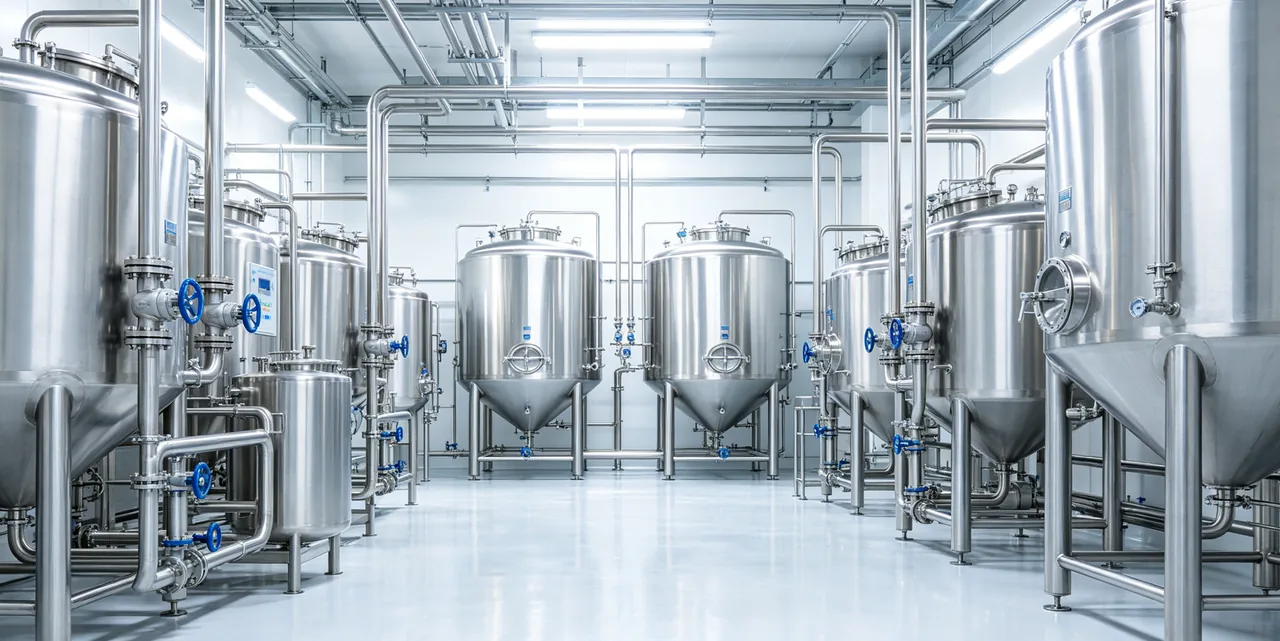
In a pharmaceutical or biotech plant, valves start, stop and divert the flow of high-purity water, buffers, media, intermediates and finished product through processes that must remain sterile or controlled-bioburden from end to end. They sit on water-for-injection (WFI) loops, fermentation and bioreactor circuits, chromatography and filtration skids, CIP/SIP systems and filling lines. Unlike general industry, the valve here is not just a flow device—it is part of the contamination-control boundary, and its hygienic design is as important as its flow function.
Why Selection Is Critical
A poorly chosen valve in pharma service is a direct quality and safety risk. A crevice, dead leg or rough surface can harbour microorganisms and grow biofilm that survives cleaning and contaminates a batch; a leaking stem can let product or sterilant escape; a valve that cannot withstand repeated steam sterilisation will degrade and shed particles. Because a contaminated batch can mean product recall and patient-safety consequences, valve selection is governed by hygienic-design standards and validated cleaning rather than by cost or generic flow specs.
2. Operating Conditions & Engineering Challenges
Hygiene and Cleanability
The central engineering challenge is cleanability. Wetted geometry must be crevice-free and self-draining, with no pockets, threads or dead legs where fluid can stagnate. Wetted surfaces must be smooth—specified as a maximum surface roughness (Ra)—so that product does not adhere and cleaning is effective; the required Ra is defined in ASME BPE and achieved by polishing and electropolishing. The valve must present a continuous, drainable internal path so that cleaning and rinsing solutions contact every wetted surface and drain completely.
CIP/SIP and Sterilization
Pharmaceutical systems are cleaned and sterilised in place: CIP (clean-in-place) circulates cleaning chemicals through the assembled system, and SIP (steam-in-place) passes saturated steam through it to sterilise. Valves must withstand repeated thermal cycling between ambient cleaning temperature and steam sterilisation temperature without diaphragm or seal degradation, and they must be orientable so condensate and cleaning fluid drain rather than pool. This repeated thermal and chemical cycling is a primary driver of valve and diaphragm material selection and of scheduled replacement.
Contamination Control
Every sealing interface and crevice is a potential contamination site. Designs that isolate the process fluid from the mechanism (such as the diaphragm valve) remove the stem-packing contamination path entirely. Dead legs are minimised by zero-static and point-of-use valve designs. Elastomer and diaphragm materials are selected not only for chemical and thermal resistance but for regulatory compliance with product-contact requirements.
3. Common Valve Types Used in Pharma
A focused set of valve types covers nearly all pharmaceutical and biotech duties:
- Diaphragm valves (the primary choice): the weir diaphragm valve dominates sterile and high-purity service because its membrane gives a crevice-free, drainable, CIP/SIP-compatible, leak-free path. See the dedicated Diaphragm Valve page for its working principle and weir-versus-straight-through selection.
- Sanitary ball valves: used where full-bore flow and quarter-turn operation are needed; cavity-filled and encapsulated-seat hygienic designs minimise the body cavity that would otherwise trap product. See Ball Valve.
- Sanitary butterfly valves: compact, economical isolation for larger-bore hygienic lines and tank outlets. See Butterfly Valve.
- Check valves: hygienic non-return protection on pumps and loops. See Check Valve.
- Sampling and point-of-use valves: specialised zero-dead-leg designs for aseptic sampling.
4. Material Selection for Pharma
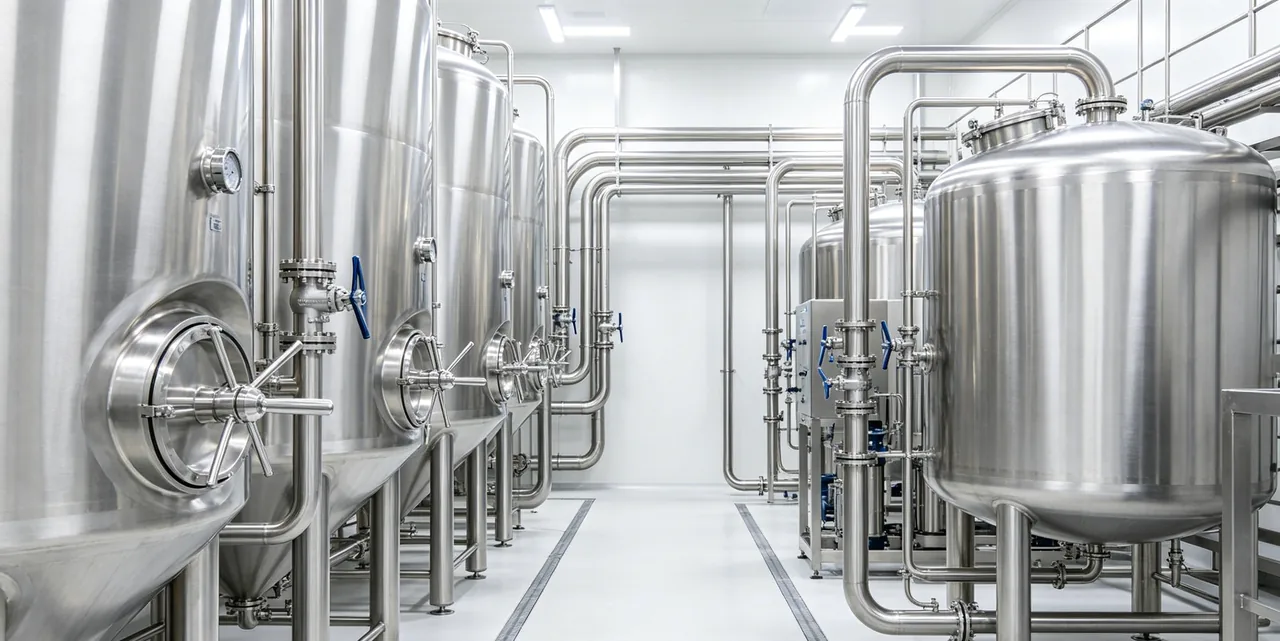
Materials in contact with product are tightly constrained by hygiene and regulatory compliance:
- 316L stainless steel: the standard wetted metal, chosen for corrosion resistance and low carbon content for weldability; surfaces are mechanically polished and electropolished to the required Ra.
- Diaphragm and elastomer materials: EPDM and PTFE-faced diaphragms are common; the wetted elastomers must comply with product-contact regulations, specified against FDA and USP Class VI requirements as applicable, with the qualifying grade documented.
- Surface finish: the maximum Ra and the electropolish requirement are taken from ASME BPE, not assumed.
For the underlying material engineering, see the Valve Materials cluster.
5. Applicable Standards & Certifications
Hygienic Design Standards
- 3-A Sanitary Standards: hygienic equipment design and cleanability, originating in dairy/food and applied to sanitary process valves.
- EHEDG: European hygienic design guidelines, cleanability test methods and certification.
- ASME BPE (Bioprocessing Equipment): the reference for bioprocess hygienic design—surface finish (Ra), materials, dimensions and fittings; the specific limits are defined in the standard.
Material and Regulatory
- FDA product-contact requirements and USP Class VI biocompatibility for wetted elastomers and plastics, with the qualifying grade documented per those references.
- cGMP: current Good Manufacturing Practice frames the overall validated, contamination-controlled environment the valves operate within.
See the Valve Standards cluster for how these interlock with the wider standards picture; the numeric grades and Ra values come from the standards themselves.
6. Engineering Decision Model for Pharma
A repeatable path to the right pharmaceutical valve specification:
- Step 1 — Define the process duty: sterile vs non-sterile, high-purity water (WFI/PW), buffer, media, product or CIP/SIP fluid, and the pressure/temperature envelope.
- Step 2 — Set the hygienic level: select the applicable hygienic standards (ASME BPE, 3-A, EHEDG) and the cleanability/drainability requirement.
- Step 3 — Choose the valve type: default to the weir diaphragm valve for sterile/high-purity duty; use sanitary ball, butterfly, check or sampling valves for specific functions.
- Step 4 — Specify materials and finish: 316L wetted metal at the required Ra and electropolish, with FDA/USP Class VI-compliant diaphragm and elastomers.
- Step 5 — Confirm CIP/SIP and validation: verify thermal-cycling capability, drainable orientation and that cleaning can be validated.
7. Common Failure Risks
The recurring failure modes in pharmaceutical valve service are predictable and preventable:
- Dead-leg stagnation and biofilm: fluid trapped in crevices or dead legs grows biofilm that survives cleaning—prevented by crevice-free, zero-static, drainable design.
- Diaphragm fatigue: repeated cycling and CIP/SIP thermal cycling fatigue the diaphragm; prevented by correct material selection and scheduled replacement of this consumable part.
- Seal and elastomer ageing: chemical and thermal exposure degrade seals over time, risking leakage and particle shedding.
- Surface degradation: loss of finish or pitting creates adhesion and cleaning failure points; preserved by correct material and finish and avoiding aggressive mechanical damage.
Frequently Asked Questions
Why are diaphragm valves preferred in pharmaceutical processing?
Diaphragm valves are preferred because the flexible diaphragm isolates the process fluid completely from the mechanism and atmosphere, leaving a smooth, crevice-free, fully drainable flow path. That design eliminates stem-leakage and dead-leg contamination risks and withstands repeated clean-in-place and steam-in-place cycles—exactly what sterile pharmaceutical and biotech processes demand.
What is the difference between 3-A and EHEDG?
Both are hygienic design standards. 3-A Sanitary Standards originated in the US dairy and food industry and certify equipment for cleanability and crevice-free construction. EHEDG (European Hygienic Engineering & Design Group) provides European hygienic design guidelines, test methods and certification. Pharmaceutical valves are often specified to ASME BPE plus 3-A and/or EHEDG depending on the market and process.
What surface finish is required for pharmaceutical valves?
Wetted surfaces must be smooth enough to prevent product adhesion and biofilm and to be reliably cleaned. Surface roughness is specified as a maximum Ra value, typically achieved by mechanical polishing and electropolishing of 316L stainless steel. The exact Ra limits are defined in ASME BPE and stated on the valve datasheet rather than assumed.
What are the criteria for valve selection in pharmaceutical service?
Selection is driven by hygienic design (crevice-free, drainable, CIP/SIP-capable), wetted material compliance (316L, electropolished, FDA/USP Class VI elastomers), the applicable standards (ASME BPE, 3-A, EHEDG), and the process duty (sterile, high-purity water, buffer or media). Diaphragm valves are the default, with sanitary ball, butterfly and check valves for specific duties.