
For a complete guide to industrial valve types, visit the Industrial Valve Types Overview page.
A knife gate valve is a specialised isolation valve that uses a thin, sharp-edged sliding plate to cut through and shut off media that conventional valves cannot handle—slurries, fibrous pulp, sludge, dry powders and abrasive suspensions. It is a strictly on-off (open or closed) device, not a throttling valve, and it trades the tight gas shutoff of a wedge gate or ball valve for the ability to shear through solids-laden flow in a compact, low-cost, wafer-thin body. This page explains how knife gate valves work, their internal anatomy, where they excel and where they fall short, the industries that depend on them, and the standards that govern their design and testing.
1. Working Principle
Basic Operating Mechanism
A knife gate valve operates by raising and lowering a flat metal plate—the gate—linearly across the flow path, perpendicular to the pipe axis. The lower edge of the gate is bevelled to a sharp knife edge. As the gate descends through the seat, this edge slices through suspended solids, fibres and viscous media rather than trying to squeeze them aside, allowing the valve to close cleanly in service where a wedge would jam. When the gate is fully retracted into the bonnet above the body, the bore is unobstructed and flow passes through with minimal restriction; when fully lowered, the gate spans the bore and isolates flow.
The gate is driven by a stem connected to an actuator. Manual handwheel and rising-stem designs are common for infrequent operation, while pneumatic cylinder actuators are standard in automated slurry and pulp plants for fast cycling, and electric actuators serve remote or torque-limited duties. Because the gate travels in a straight line equal to the bore diameter, the actuator stroke is longer than the quarter-turn of a ball valve but the mechanism is mechanically simple and robust. For system-level valve selection strategy, see Common Valve Selection Mistakes.
Operating Physics and Flow Behavior
The defining physics of the knife gate valve is the shearing action of the sharp gate edge. In media carrying fibres (paper pulp), suspended solids (mineral tailings) or build-up-prone sludge, a blunt closure element pushes material ahead of it and packs it against the seat, preventing full closure and damaging sealing surfaces. The knife edge instead cuts the material at the closure line, parting the flow stream so the gate can complete its travel and seal. This is why the valve is the default choice for service that would clog or seize a conventional gate, ball or globe valve.
Knife gate valves are designed for full-open or full-closed duty. In the fully open position, the through-going bore gives low pressure drop comparable to a full-bore gate valve. They are not intended for throttling: at intermediate gate positions the exposed gate edge and seat face the full high-velocity flow, producing severe wire-drawing erosion and rapid seat wear, especially in abrasive slurry. Standard designs are unidirectional—the gate seals against a seat on the downstream side and is rated for flow and shutoff in one direction—while bidirectional and through-conduit designs are available where reverse sealing is required.
2. Structural Diagram and Anatomy
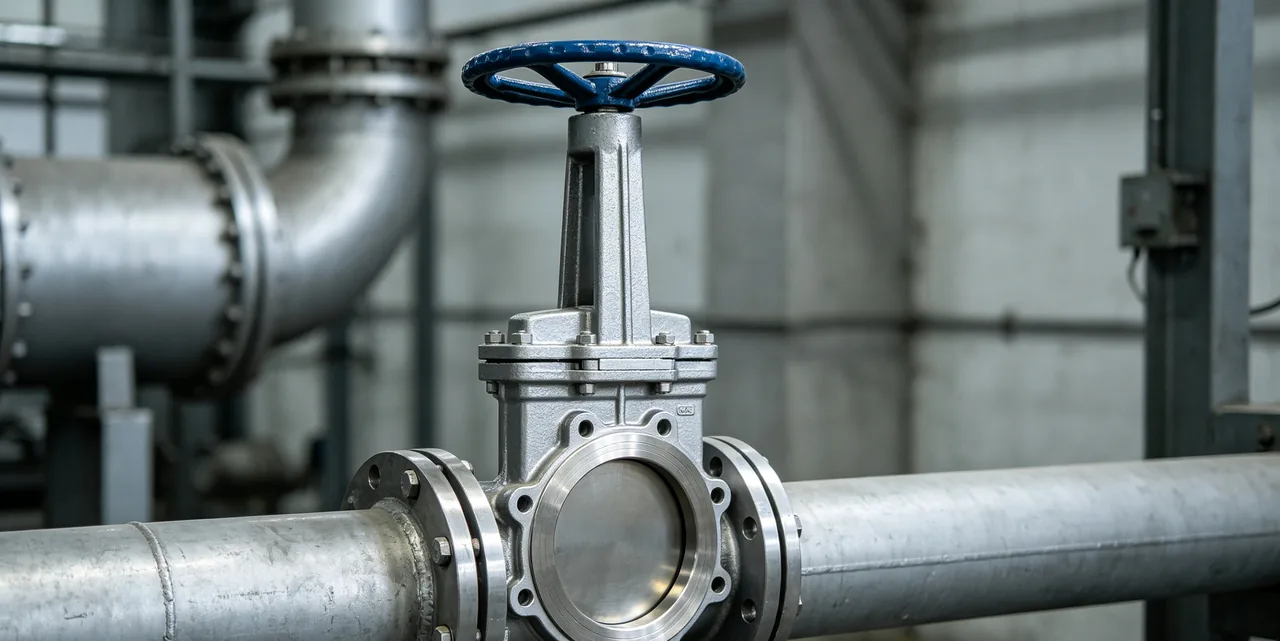
Component Breakdown
A knife gate valve is built from a small number of robust components, each selected for the abrasive, solids-laden duty it serves:
- Body: A compact, thin (wafer-style) cast or fabricated body that houses the gate and seat and provides the pipeline connection. Bodies are commonly produced in cast iron, ductile iron, carbon steel and stainless steel (such as ASTM A351 CF8M / 316), with the material chosen for the corrosivity and abrasiveness of the slurry. The wafer profile keeps face-to-face dimension and weight far below a wedge gate valve of the same bore.
- Gate (blade): The flat sliding plate with a bevelled, sharpened lower edge that performs the cutting and sealing. Gates are made from stainless steel and, for abrasive service, from hardened or surface-treated alloys to resist edge dulling and wire-drawing. Gate flatness and surface finish are critical to leak-tight seating.
- Seat: The sealing element the gate edge closes against. Soft seats (elastomer such as EPDM, NBR or PTFE, or a resilient insert) deliver tighter shutoff and are favoured for general slurry and on-off duty; metal seats are specified for high-temperature, high-abrasion or longer-life service where a soft seat would be cut. Seat selection is the single biggest driver of shutoff tightness and service life.
- Stem: The rising or non-rising shaft that transmits actuator force to the gate. Rising-stem designs give a clear visual indication of gate position.
- Packing and gland: The stuffing-box packing (often PTFE or graphite) seals around the moving gate where it passes out of the body, and the adjustable gland compresses it. Because the gate is a flat plate moving through packing, atmospheric leakage at the gland is the most common maintenance point and must be specified and tightened correctly.
- Actuator: Handwheel, pneumatic cylinder, or electric actuator, sized for the gate friction and differential-pressure load. Pneumatic actuation dominates automated slurry plants for its fast, repeatable cycling.
Structure Explanation: Wafer vs Lugged
Knife gate valves are supplied in two principal body configurations. Wafer-style valves have a thin body that is clamped between two pipeline flanges by long through-bolts; they are the lightest and lowest-cost option and are the most widely used. Lugged valves have threaded lugs cast into the body so each side bolts independently to its mating flange, allowing one side of the pipeline to be removed (dead-end or end-of-line service) without disturbing the other. Through-conduit and bidirectional variants extend the basic design where reverse-direction sealing or fully unobstructed bore is required. Selection between unidirectional and bidirectional, and between soft and metal seat, is driven by flow direction, shutoff-tightness requirement and the abrasiveness of the media.
3. Advantages and Disadvantages
The knife gate valve occupies a clear niche: it is the economical, space-saving solution for isolating thick, fibrous and abrasive media that defeat conventional valves. Its strengths and limitations both follow directly from the thin sliding-gate design.
Advantages:
- Handles difficult media: The sharp gate cuts through slurry, pulp, sludge, tailings and dry powders that would clog a wedge gate, ball or globe valve—its core advantage.
- Compact and lightweight: The wafer body has a very short face-to-face dimension and low weight, saving space and installed cost in tight pipe racks and on large-bore lines.
- Low cost: Simple construction and minimal material make knife gate valves significantly cheaper than wedge gate valves of equal bore, especially in large diameters.
- Low pressure drop when open: The full through-going bore gives minimal flow restriction in the open position.
- Self-cleaning closure: The cutting action clears the seating line on every stroke, reducing build-up.
Disadvantages:
- On-off only: Not suitable for throttling; partial-open operation causes rapid gate and seat erosion.
- Unidirectional sealing (standard designs): Most designs seal reliably in one direction only; bidirectional service requires a specific design.
- Packing-gland leakage: The flat gate moving through packing makes atmospheric leakage a recurring maintenance item; not ideal for hazardous or fugitive-emission-critical fluids without special packing.
- Abrasive wear: The gate edge and seat wear in abrasive slurry and require periodic replacement; shutoff tightness degrades as they wear.
- Lower pressure rating: Generally rated for lower pressures than wedge gate or ball valves of the same size.
4. Industrial Applications and Use Cases
Common Industrial Sectors
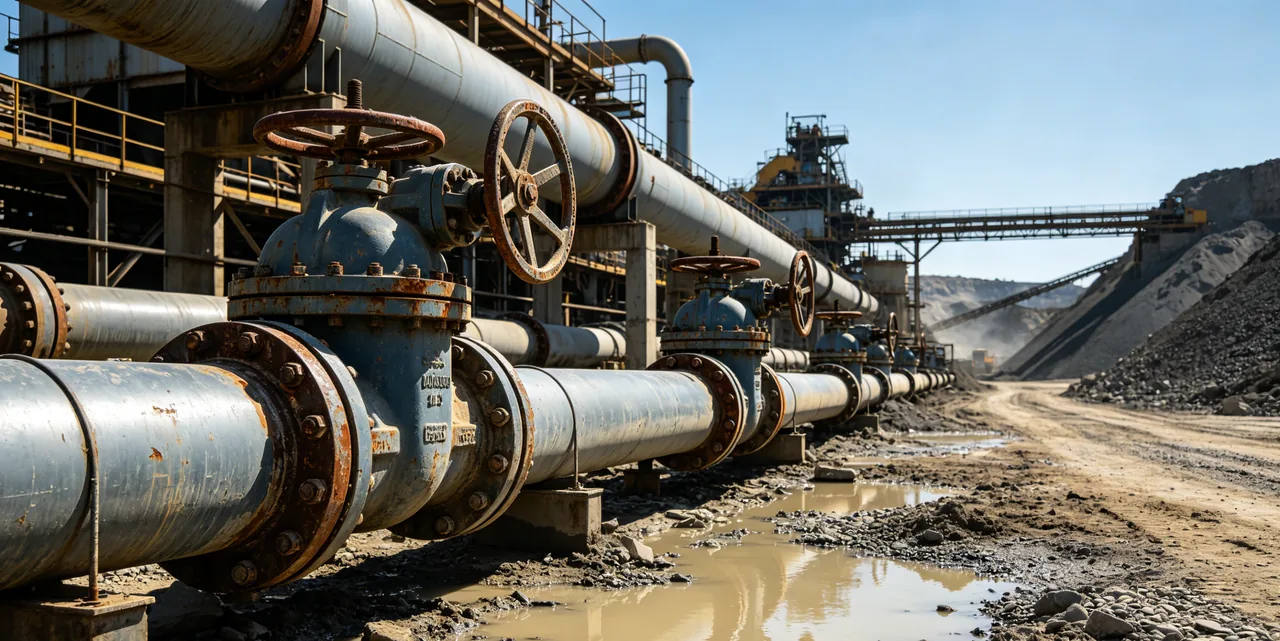
Knife gate valves are concentrated in industries that move solids-laden, fibrous or abrasive media:
- Mining and mineral processing: Isolation of tailings slurry, thickener underflow, ore-pulp and abrasive process streams. The combination of abrasion-resistant gates, replaceable seats and low cost makes knife gate valves the standard on-off valve across concentrators and tailings handling. For the full duty context, see Valves for the Mining Industry.
- Pulp and paper: Handling fibrous stock, pulp suspensions and recycled fibre flows where the gate shears through fibre that would mat against a conventional seat. This sector is one of the original applications that drove the valve's development.
- Water and wastewater treatment: Isolation of raw sewage, primary sludge, grit slurry and screened effluent in treatment plants. See Valves for Water Treatment for the broader selection picture.
- Power generation: Ash slurry, flue-gas-desulphurisation (FGD) slurry and circulating-water service in thermal plants.
- Food, sugar and bulk solids: Dry powders, granules and viscous food slurries in dosing and transfer lines.
Typical Engineering Scenarios
The following service combinations illustrate how knife gate valve parameters are chosen from the duty:
- Abrasive tailings slurry isolation (mining): Wafer knife gate valve, ductile iron or stainless body, hardened/abrasion-resistant gate, replaceable elastomer or metal seat selected for the slurry abrasiveness, pneumatic actuator for automated on-off cycling, packing chosen for the slurry temperature. Operated strictly open or closed to protect the gate edge.
- Pulp stock isolation (pulp and paper): Stainless steel wafer body and gate for corrosion resistance, soft seat for tight shutoff on fibrous stock, handwheel or pneumatic actuation depending on cycling frequency.
- Primary sludge isolation (wastewater): Lugged body for end-of-line maintenance access, soft elastomer seat for bubble-tight isolation, corrosion-resistant materials for the sewage environment.
Pressure and temperature limits, leakage class and seat-life expectations are set by the chosen design and seat type and confirmed against the manufacturer's rating and the governing standard rather than assumed—the exact values are taken from the valve datasheet and applicable code.
5. Relevant Standards and Codes
Knife gate valve design, dimensions and testing are governed by a focused set of standards. Specific pressure, temperature and leakage values must always be read from the applicable standard and the manufacturer datasheet, not assumed:
- MSS SP-81 — Stainless Steel, Bonnetless, Flanged Knife Gate Valves: The principal dimensional and design standard specifically for knife gate valves, covering face-to-face dimensions, design and pressure ratings for the bonnetless flanged type. It is the first reference for specifying a knife gate valve.
- API 598 — Valve Inspection and Testing: Applied for shell and seat test procedures and acceptance criteria where the purchaser specifies it; the allowable leakage rates and test pressures are defined by the standard and the seat type.
- ISO 5208 — Industrial Valves, Pressure Testing of Metallic Valves: Defines the leakage rate classes used to specify and verify how tight the shutoff must be; the required class is stated on the datasheet rather than assumed.
- Pressure class and materials: Body materials and pressure-temperature ratings follow the relevant ASME / ASTM material specifications; the rated working pressure at the operating temperature is read from the manufacturer's rating, which references these standards.
For the full picture of how valve standards interlock, see the Valve Standards cluster.
6. Related Valve Types and Internal Linking
The knife gate valve is a specialised member of the gate valve family. Before specifying one, confirm against the alternative isolation valve types and the standards that apply to your service:
- Gate Valve — The conventional wedge gate valve for clean liquid and gas isolation; choose the knife gate variant instead when the media carries solids, fibre or abrasive slurry that a wedge would jam against.
- Industrial Valve Types Overview — The complete engineering summary of all valve types and where each fits.
- Mining Industry Valves and Water Treatment Valves — The two application clusters where knife gate valves are most heavily used.
- Valve Standards — MSS SP-81, API 598 and ISO 5208 in context.
Frequently Asked Questions
What is the difference between a gate valve and a knife gate valve?
A conventional gate valve uses a thick wedge gate seated between two body seats for clean liquid and gas isolation, while a knife gate valve uses a thin, sharp-edged plate gate that shears through fibrous and solids-laden media. The knife gate is lighter, wafer-thin, and built for slurry, pulp and powder service rather than tight gas shutoff.
Can a knife gate valve handle solids?
Yes. Handling solids is the primary reason knife gate valves exist. The sharp gate edge cuts through suspended fibres, sludge, tailings slurry and dry powders that would clog a standard gate or ball valve. Soft-seated and through-going designs minimise media trapping, and abrasion-resistant gate and seat materials extend service life in mining and pulp applications.
What are the disadvantages of knife gate valves?
Knife gate valves are on-off devices, not throttling valves, and partial-open operation causes rapid gate and seat erosion. Standard unidirectional designs seal in one flow direction only, packing-gland leakage to atmosphere is common, and abrasive slurry wears the gate edge over time. They also offer lower pressure ratings than wedge gate or ball valves.
What are common knife gate valve problems?
The most frequent issues are packing leakage around the gate, seat wear and resulting leakage in abrasive slurry service, gate edge dulling, and media build-up in the bonnet that prevents full closure. Correct selection of seat type, gate material, packing and actuator, plus on-off-only operation, prevents most of these failures.